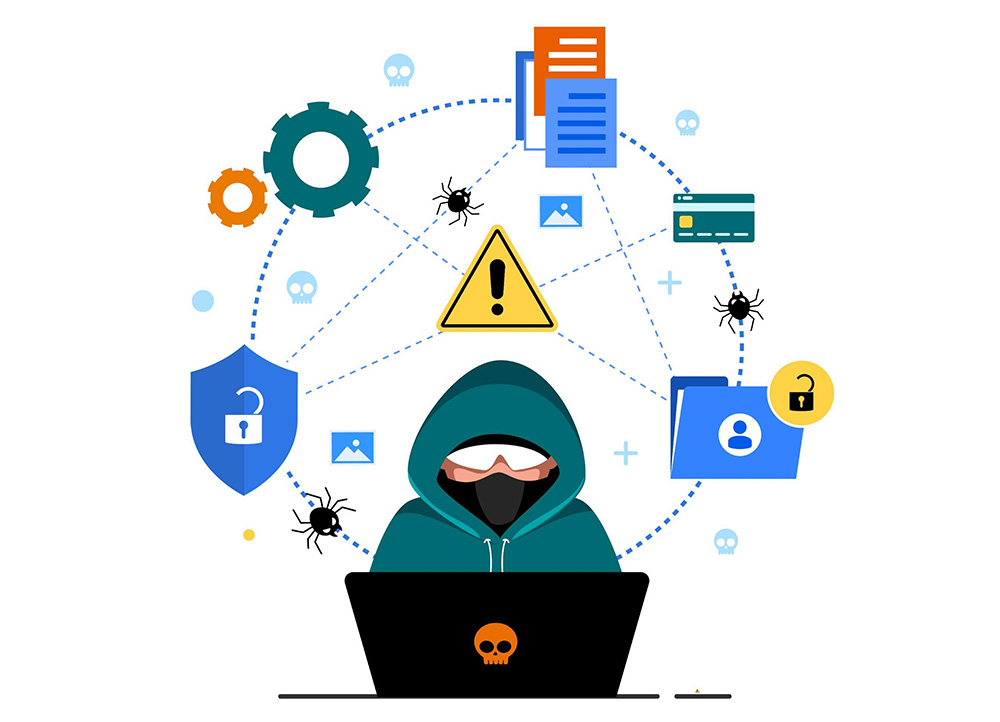
A Man-in-the-Middle attack is a prominent digital threat that can heavily compromise cybersecurity boundaries. Despite being highly dangerous, many people remain unfamiliar with how this specific exploit operates. A Man-in-the-Middle attack directly threatens the data integrity and privacy of its victims.
Through this article, you will obtain a comprehensive explanation of what a Man-in-the-Middle attack is, spanning from its core definition and execution methods to effective prevention strategies. Check out the complete discussion below!
What Is Meant by a Man-in-the-Middle Attack?
A Man-in-the-Middle (MITM) attack is a general term used when a cybercriminal positions themselves directly inside the communication pathway between two parties—typically a user and an application—either to eavesdrop on the data or to impersonate one of the entities. To the victims, the active data exchange will appear perfectly normal, causing the targeted parties to drop their guard.
{{blogcard id=”175”}}
The ultimate goal of a Man-in-the-Middle attack is to steal private information, such as login credentials, account details, and credit card numbers. The primary targets for these attacks are typically users of financial applications, SaaS platforms, e-commerce networks, and any other websites that require user authentication and house sensitive personal data.
The business intelligence or credentials harvested during an MITM attack can be exploited for various malicious objectives, including identity theft, financial fraud, or unauthorized password modifications executed without the victim’s knowledge. Additionally, this captured information can be used to launch secondary phishing and social engineering scams against the victim’s professional network and associates.
A classic example of an MITM attack is active wiretapping. In this scenario, the attacker establishes independent connections with both victims, relaying messages between them to make them believe they are speaking directly to each other over a secure, private connection. In reality, the entire conversation is completely controlled and intercepted by the attacker.
The perpetrator intercepts all relevant data packets passing between the two victims and can inject counterfeit messages. This exploit is surprisingly easy to execute in various settings; for instance, an attacker within range of an unencrypted, public Wi-Fi access point can easily insert themselves as a “man in the middle.”
How Is a Man-in-the-Middle Attack Executed?
An MITM attack occurs when a hacker successfully inserts their intercept software between an active online transaction or communication workflow carried out by two victims. By distributing malware, the attacker gains easy backdoor access to the user’s web browser, as well as the data transmitted and received during transactions.
{{blogcard id=”178”}}
Typically, an MITM exploit is launched through a two-step process known as data interception and data decryption. Here is the detailed breakdown:
1. Interception
In this initial stage, the attacker intercepts or splits the user’s network communication traffic using a compromised or modified network architecture. Generally, this phase is executed by setting up a spoofed, free Wi-Fi hotspot in public spaces. Anyone who connects to this rogue Wi-Fi network automatically becomes a potential target.
To mask their malicious intent, attackers name their rogue Wi-Fi network after legitimate, harmless wireless networks, such as a business’s actual internal network or a common public network frequently found in that specific area. Furthermore, these attacker-controlled Wi-Fi networks typically do not require a password, enticing potential victims to connect instantly without friction.
Once the victim connects to the rogue network, the attacker gains complete visibility over every digital data exchange, whether conducted through mobile applications, web browsers, or corporate platforms. With this visibility achieved, the man-in-the-middle exploit begins.
2. Decryption
As the name implies, decryption is the phase where the intercepted data is broken down and decoded. This step allows the attacker to ultimately read and exploit the harvested data for personal or financial gain; for example, they can execute identity theft or severely disrupt corporate business operations.
What are the Primary Threats of an MITM Attack?
Just like other highly destructive cyberattacks, a Man-in-the-Middle exploit brings serious threats to data security and user privacy. Here are some of the primary threats associated with MITM campaigns:
1. Network Eavesdropping
The most dangerous threat of an MITM attack is the silent eavesdropping of a victim’s highly sensitive records, such as login credentials, banking details, and credit card profiles. This stolen data is subsequently utilized to perpetrate identity theft, unauthorized wire transfers, and asset draining.
2. Cookie Theft (Session Hijacking)
Web cookies function to store active session tokens and login details—such as usernames and encrypted keys—so users do not have to repeatedly log into platforms (especially financial portals and e-commerce dashboards). Through an MITM attack, these active login cookies can be intercepted and stolen by the perpetrator, granting them immediate, authenticated entry into the victim’s corporate or personal accounts.
3. DNS Spoofing (DNS Poisoning)
When attempting to access a website, your request routes to a web server via its resolved IP address. Through an MITM attack, the perpetrator can alter the routing by injecting a fraudulent DNS entry. Consequently, the attacker can redirect your web traffic away from the legitimate site and force your browser to load a malicious server architecture designed to harvest your inputs.
{{blogcard id=”176”}}
How to Prevent Man-in-the-Middle Attacks
Blocking an MITM attack requires a combination of practical hygiene from the user end, paired with robust encryption and verification mechanisms on the application or website infrastructure.
As an end-user or employee, you can implement the following steps to mitigate MITM risks:
- Avoid connecting to public Wi-Fi networks that are not password-protected.
- Pay close attention to web browser alerts that flag a website as “Not Secure” or indicate certificate mismatches.
- Immediately log out of sensitive corporate applications as soon as you finish using them.
- Refrain from conducting sensitive financial or corporate transactions while connected to public networks (such as in cafes, coffee shops, or hotels).
For website operators and enterprises, adopting secure communication protocols, including TLS and HTTPS, significantly minimizes spoofing vectors by strongly encrypting and authenticating all transmitted data. Doing so prevents third-party traffic interception and effectively blocks the decryption of sensitive data assets, such as authentication tokens.
For web applications, an infrastructure best practice to prevent MITM vulnerabilities is enforcing SSL/TLS encryption across every single page, rather than restricting it strictly to login or checkout gateways. This comprehensive deployment dramatically minimizes the opportunities for an attacker to hijack a user’s session cookies.
Fortify Your Infrastructure with Cloudmatika
If you want to completely shield your website or applications from Man-in-the-Middle threats, utilize premium infrastructure solutions from Cloudmatika. By combining Acronis Cyber Protect to secure your core servers with Sectigo SSL Certificates to encrypt your web traffic, your corporate data footprint becomes exceptionally secure.
Acronis Cyber Protect delivers an integrated Cybersecurity & Backup ecosystem that embeds seamlessly into your infrastructure, significantly elevating your defenses against sophisticated cyberattacks. Meanwhile, Sectigo SSL Certificates deliver high-grade cryptographic validation within your cloud hosting environment.
Contact Cloudmatika today to explore our full security frameworks and elevate your website’s protection right now!